Why Your Business Needs a Website in 2026 | YHH IT Solutions
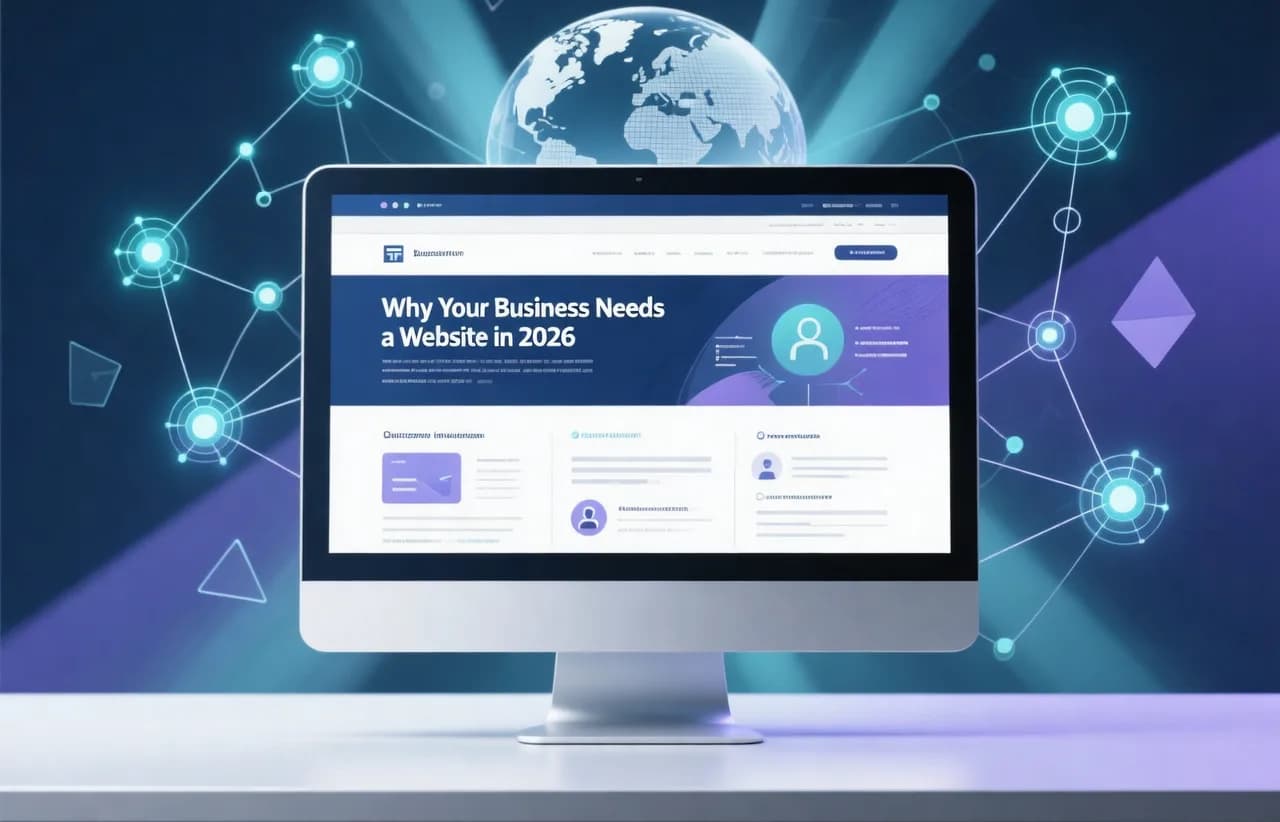
The digital landscape has fundamentally shifted. What was optional just a few years ago has now become non-negotiable.
In 2026, the question is no longer “Should my business have a website?”
The real question is “Can my business afford not to?”
Consumer expectations have evolved. The way people discover, research, and choose businesses has changed completely. Before making a decision, customers want to verify credibility, compare options, and understand what a business offers, often before contacting the business directly.
If your business isn’t showing up where customers are actively looking, you’re not just missing opportunities. You’re losing trust.
This isn’t about chasing trends or adopting technology for the sake of it. It’s about meeting the baseline expectations of modern consumers and ensuring your business remains visible, accessible, and competitive in a digital-first world.
The Reality of Consumer Behavior in 2026
Before we dive into specific reasons, you need to understand how radically consumer behavior has shifted.
In 2026, the customer journey begins online for virtually every purchase decision. Whether someone is looking for a local plumber, researching B2B software, or choosing where to eat dinner, their first step is digital.
→ They search. → They compare. → They verify. → They decide.
And if you're not part of that digital journey, you simply don't exist in their consideration set.
According to recent data, over 80% of consumers research a business online before making a purchase or visiting a location. For younger demographics, that number approaches 95%.
Your potential customers aren't asking if you have a website. They're assuming you do. When they discover you don't, it raises immediate red flags about your legitimacy, professionalism, and reliability.
Your Website Is Your Digital Proof of Existence
A business without a website faces a fundamental credibility problem.
Think about your own behavior. When you hear about a new business, what's the first thing you do? You search for it online. You want to see their website, read about what they offer, and confirm they're legitimate.
Your customers do the same thing.
A website signals that:
-
You're a real, established business
-
You're invested in your professional presence
-
You're accessible and transparent
-
You take your business seriously
Without a website, you're asking customers to trust you based on incomplete information. In an era of scams, fly-by-night operations, and questionable online businesses, that's a big ask.
The Trust Gap
Consumer trust is earned through transparency and accessibility. A website provides both. When potential customers can visit your website to see your products, read about your services, understand your pricing, and learn your story, they develop confidence in your business.
You Don't Control Social Media. You Control Your Website.
Many business owners think a Facebook page or Instagram account can replace a website. This is a dangerous misconception.
Social media platforms are rented land. Your website is owned property.
Here's what that means in practice:
-
Algorithm changes can make your content invisible overnight
-
Platform policies can restrict how you communicate with your audience
-
Account suspensions can happen without warning or recourse
-
Platform shutdowns or declining popularity can eliminate your entire presence
Remember when businesses relied heavily on Facebook organic reach? Then the algorithm changed, and suddenly businesses had to pay to reach the same audience they'd built for free. Or when Instagram changed its feed from chronological to algorithmic? Engagement for many businesses dropped dramatically.
Your Website Is Your Foundation
Your website is the one digital asset you truly own and control.
You decide what content appears, how it's organized, and how visitors navigate. You're not subject to character limits, content restrictions, or algorithmic whims.
When you drive traffic to your website, you're building an asset. When you drive traffic to social media, you're building someone else's asset.
Websites Drive Business Results That Social Media Can't Match
Let's talk about conversions, leads, and sales.
Social media is excellent for awareness and engagement. But when it comes to converting interest into action, websites dominate.
Why Websites Convert Better
Intent: People who visit your website have higher intent than social media browsers. They're actively seeking information about your business.
Control: You can design conversion pathways exactly how you want them, from simple contact forms to complex e-commerce funnels.
Information depth: Websites allow you to provide comprehensive information that helps customers make informed decisions.
Multiple touchpoints: A well-designed website guides visitors through a journey, addressing objections and building confidence at each step.
The Numbers Don't Lie
|
Metric |
Website |
Social Media Only |
|
Conversion optimization |
Full control over design, copy, and user flow |
Limited to platform constraints |
|
Lead capture capability |
Custom forms, chatbots, and email collection |
Restricted by platform rules |
|
Transaction processing |
Integrated e-commerce with full functionality |
Limited shopping features, external links |
|
Customer data ownership |
Complete access to analytics and customer data |
Limited analytics, no data ownership |
|
Professional credibility |
High - demonstrates business investment |
Low - perceived as minimum effort |
A website gives you the infrastructure to capture leads, nurture prospects, and close sales in ways that social media simply cannot replicate.
Search Engines and AI Discovery Require a Website
How do customers find businesses they don't already know about?
In 2026, there are two primary discovery mechanisms: search engines and AI assistants.
Both require a website to function effectively.
Search Engine Visibility
When someone searches for "best IT company in Pokhara" or "Ads free Nepali calendar," search engines display websites, not social media profiles.
Google, Bing, and other search platforms are designed to surface relevant web pages based on content, authority, and user intent.
Without a website, you're invisible in search results.
This means you're missing out on customers actively looking for exactly what you offer. You're forfeiting high-intent traffic to competitors who invested in a web presence.
AI-Driven Discovery
ChatGPT, Claude, Perplexity, and other AI assistants are increasingly how people research and make decisions.
They analyze content, extract key details, and provide recommendations based on the information available on the web.
Your Website Is the Hub of All Marketing Efforts
Every marketing activity you undertake should drive people somewhere. That somewhere should be your website.
Think about the typical customer journey:
-
They see your social media post → they visit your website to learn more
-
They receive your email newsletter → they click through to your website
-
They hear about you from a friend → they visit your website to verify
-
They see your ad → they visit your website to take action
-
They attend your event → they visit your website for follow-up information
Your website is the central hub that connects all these touchpoints.
The Integration Advantage
A website allows you to:
-
Track the full customer journey across all marketing channels
-
Attribute revenue to specific marketing activities
-
Retarget visitors with precision advertising
-
Build email lists from interested prospects
-
Create content that supports all other marketing efforts
Without a website, your marketing efforts are disconnected islands. With a website, they're an integrated ecosystem.
Professional Credibility in a Competitive Market
Your competitors have websites. That's not a prediction, it's a fact.
In any industry, the businesses winning customers are those that appear professional, trustworthy, and established. A website is table stakes for that perception.
The First Impression Problem
When a potential customer compares businesses, they look for signals of quality and reliability.
A business with a professional website signals:
-
Stability and permanence
-
Investment in their business
-
Attention to detail
-
Customer-focused approach
-
Modern business practices
Even if the business without a website is objectively better, the perception gap is real and damaging.
The B2B Reality
This is especially critical for B2B businesses.
Decision-makers researching vendors expect comprehensive information: case studies, service details, pricing transparency, team credentials, and proof of expertise.
A TikTok page or Facebook profile doesn't provide the depth needed for B2B purchase decisions. A website does.
24/7 Accessibility and Customer Service
Your website works when you don't.
While you're sleeping, traveling, or focused on other tasks, your website is answering questions, providing information, and generating leads.
Always-On Information
Customers don't research businesses on a 9-to-5 schedule. They browse at night, on weekends, during lunch breaks, and whenever convenient for them.
Your website ensures:
-
Product information is always accessible
-
Service details are always available
-
Contact methods are always visible
-
FAQs address common questions automatically
-
Appointments can be booked at any time
This accessibility isn't just convenient, it's expected. Customers in 2026 don't want to wait until business hours to get basic information.
Reduced Customer Service Load
A well-designed website with comprehensive information reduces the burden on your customer service team.
When customers can find answers to common questions on your website, they don't need to call, email, or message you. This frees your team to handle complex inquiries and high-value interactions.
What a Business Website MUST Have in 2026
Not all websites are created equal. To meet modern expectations and deliver business results, your website needs specific elements.
Non-Negotiable Elements
- Mobile Optimization Over 60% of web traffic comes from mobile devices. Your website must work flawlessly on phones and tablets.
- Fast Loading Speed: Users expect pages to load in under three seconds. Slow websites drive visitors away and hurt search rankings.
- Clear Value Proposition: Visitors should understand what you do and why it matters within seconds of landing on your site.
- Easy Navigation Intuitive menus, logical structure, and clear pathways to important information are essential.
- Contact Information Phone number, email, physical address (if applicable), and contact forms should be prominently displayed.
- Security (HTTPS) SSL certificates are mandatory for security and search ranking. Visitors expect to see that padlock icon.
If you're planning to build a website that checks all these boxes, understanding our professional website development services can help you make informed decisions about features, technology, and long-term scalability.
The Real Cost of Not Having a Website
Let's address the elephant in the room: cost.
Building and maintaining a website requires investment. But not having a website carries costs that far exceed any development budget.
Opportunity Costs
Every day without a website, you're losing:
-
Search traffic that goes to competitors
-
Customer trust from people who can't verify your legitimacy
-
Sales and leads from high-intent visitors
-
Brand control to third-party platforms
-
Market share to more digitally-savvy competitors
The Comparison
|
Business With Website |
Business Without Website |
|
Appears in search results for relevant queries |
Invisible to search engine users |
|
Controls brand narrative and information |
Relies on third-party platforms for presence |
|
Captures leads 24/7 automatically |
Limited to business hours and manual outreach |
|
Builds owned audience through email and content |
Builds audience on platforms they don't control |
|
Provides comprehensive information instantly |
Requires personal interaction for basic questions |
|
Projects professional, established image |
Appears outdated or potentially untrustworthy |
|
Can implement sophisticated marketing and sales funnels |
Limited to basic platform features |
|
Owns complete customer and performance data |
Has minimal data access and insights |
The businesses thriving in 2026 are those that invested in a strong web presence. The businesses struggling are those that bet on social media alone or delayed their website development.
The Compounding Effect
The gap between businesses with and without websites grows over time.
A website that's been live for years accumulates search authority, content depth, backlinks, and brand recognition. This creates a compounding advantage that becomes increasingly difficult for late entrants to overcome.
Starting today is better than starting tomorrow. But starting last year would have been better than today.
Common Objections, Addressed
Let's tackle the most frequent reasons businesses give for not having a website.
"My customers find me through referrals."
Referrals are valuable, but even referred customers research you online before engaging.
"I'm too small to need a website."
Size is irrelevant. Customer expectations don't scale with business size. A one-person operation needs to project the same credibility as a larger company.
"My industry is old-school and doesn't need websites."
Every industry has moved online to some degree. Even traditional, relationship-based industries have customers who research online first.
"Building a website is too expensive."
Website costs vary dramatically based on complexity and features. But even a basic professional website is affordable for most businesses.
If you want a clear breakdown, this guide on website cost in Nepal explains what actually affects pricing and how to choose wisely.
"I don't have time to manage a website."
A website doesn't require daily management. Once built, it requires minimal ongoing maintenance.
Moving Forward: The Website as Business Foundation
The evidence is overwhelming. The customer behavior is clear. The competitive landscape is unforgiving.
A website in 2026 is not a marketing luxury. It's a business necessity.
It's the foundation upon which all other marketing efforts are built. It's the hub where potential customers go to verify, research, and decide. It's the asset you own in a digital landscape of rented platforms.
Your business needs to be where your customers are looking. And they're looking online, on search engines, through AI assistants, and on business websites.
Why does your business need a website in 2026?
Answered:
- Because your customers expect it. Because your competitors have it. Because every meaningful business interaction begins with an online search.
- Because you need to control your brand narrative, capture high-intent traffic, and provide information on your customers' schedules, not yours.
- Because social media platforms can change the rules overnight, but your website remains under your control.
- Because search engines and AI assistants require web content to recommend and display businesses.
- Because professional credibility in the modern market demands a professional web presence.
- Because the cost of not having a website, measured in lost opportunities, diminished trust, and competitive disadvantage, far exceeds the investment required to build one.
A website isn't about keeping up with technology. It's about meeting the fundamental expectations of modern business.
The businesses succeeding in 2026 recognized this years ago and built their web presence accordingly. The businesses struggling are those that delayed, assumed social media was enough, or underestimated how completely customer behavior has shifted online.
The only question that remains is: when will you build yours? Let's discuss this matter.